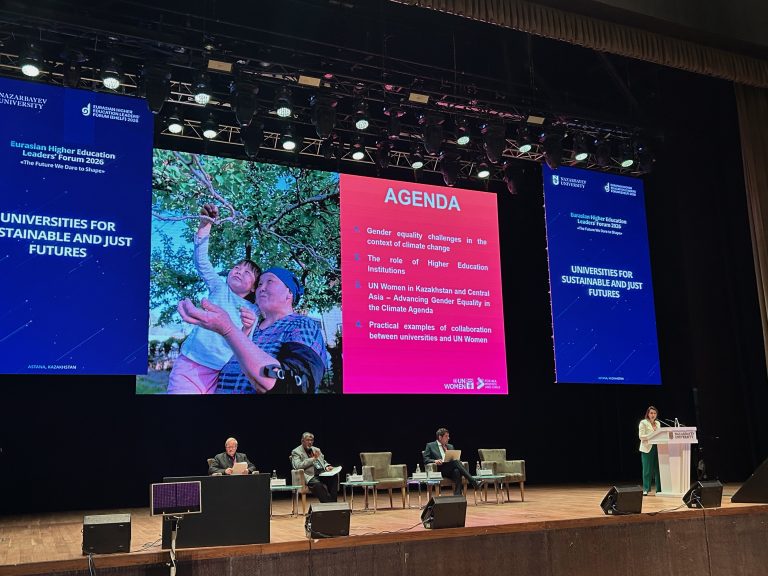
Last week, I had the privilege of attending the Eurasian Higher Education Leaders’ Forum (EHELF) – 2026, an event with the aim of bringing together university leaders, researchers, policymakers, and experts to discuss the future of higher education in a rapidly changing world.
Dr Norbert Csizmadia’s keynote speech, accompanied by visually striking slides, focusing on geography, culture, resources and sustainability set a positive and inspiring tone for the event.
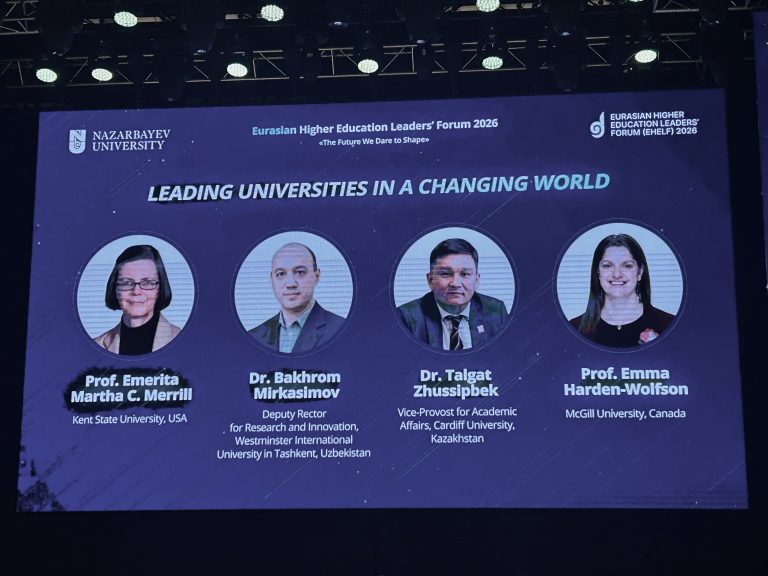
At the plenary session, Dr Aida Sagintayeva, Prof Emerita Martha Merill and Prof Emma Harden-Wolfson engaged in a detailed discussion of specific opportunities and risks. Dr Bakhrom Mirkasimov and Dr Talgat Zhussipek described the journeys of UK affiliated universities in Uzbekistan and Kazakhstan respectively, and expressed their opinions on the current challenges for universities in the region.
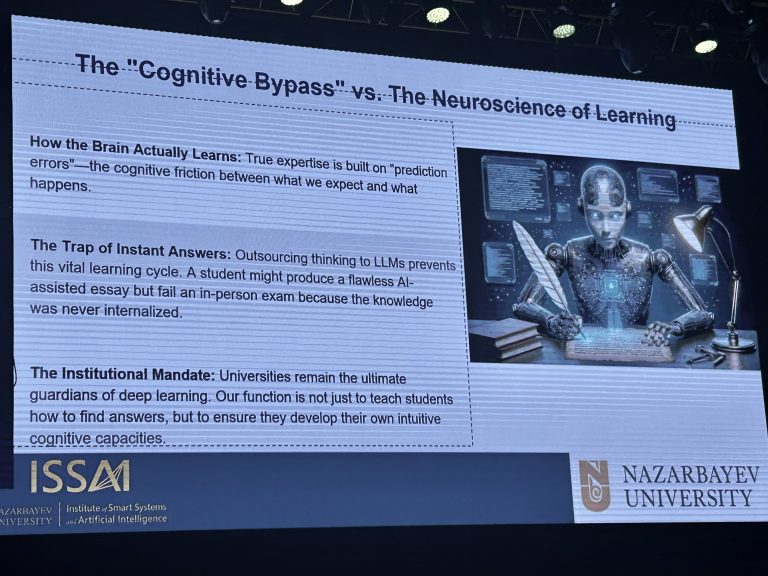
The afternoon panel discussion focused on opportunities and challenges faced by universities in the age of AI and digital transformation.
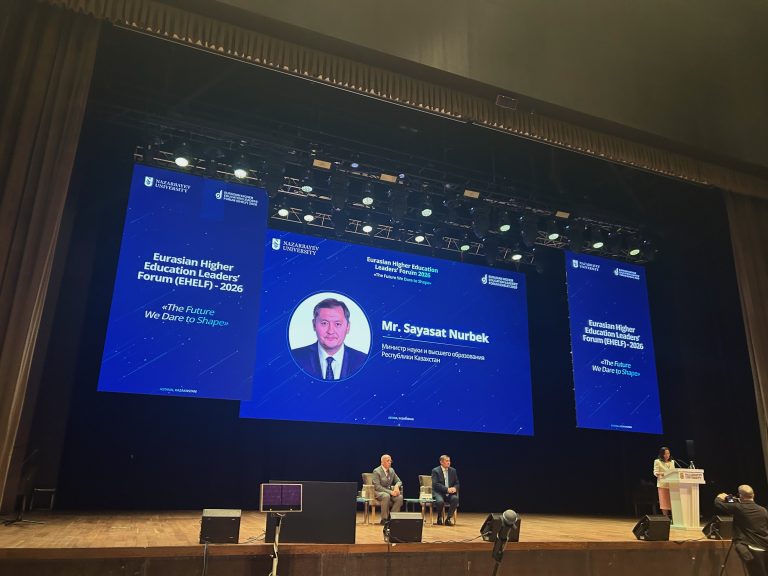
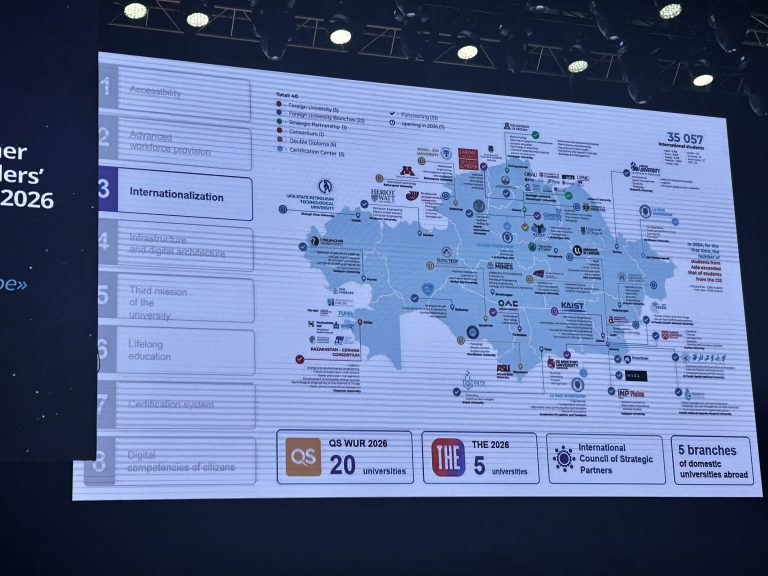
The first day concluded with the Minister of Higher Education and Science Sayasat Nurbek. His very informative address focused on developments in the higher education space in Kazakhstan, and included two very exciting announcements: a collaboration with OpenAI, and Kazakhstan becoming an associate member of the Horizon research programme of the EU.
The second day focused on sustainability issues. Dr Ceren Guven Gures, Head of UN Women’s Central Asia Liaison Office, gave a presentation that highlighted the inequalities and burdens that women endure in Central Asia.
Later in the afternoon, a set of workshops gave participants an opportunity to discuss the main challenges and their solutions.
The closing plenary’s keynote speaker was Pro-Vice Chancellor of Sunway University, Prof Mahendhiran Sanggarran Nair. Prof Nair addressed key sustainability challenges in a localised context, arguing that integrating the university into the community and the nation brings positive structural changes and ultimately benefits the university itself. He also underlined how the transition from ROI (return on investment) to ROV (return on value) is beneficial for universities and companies alike.